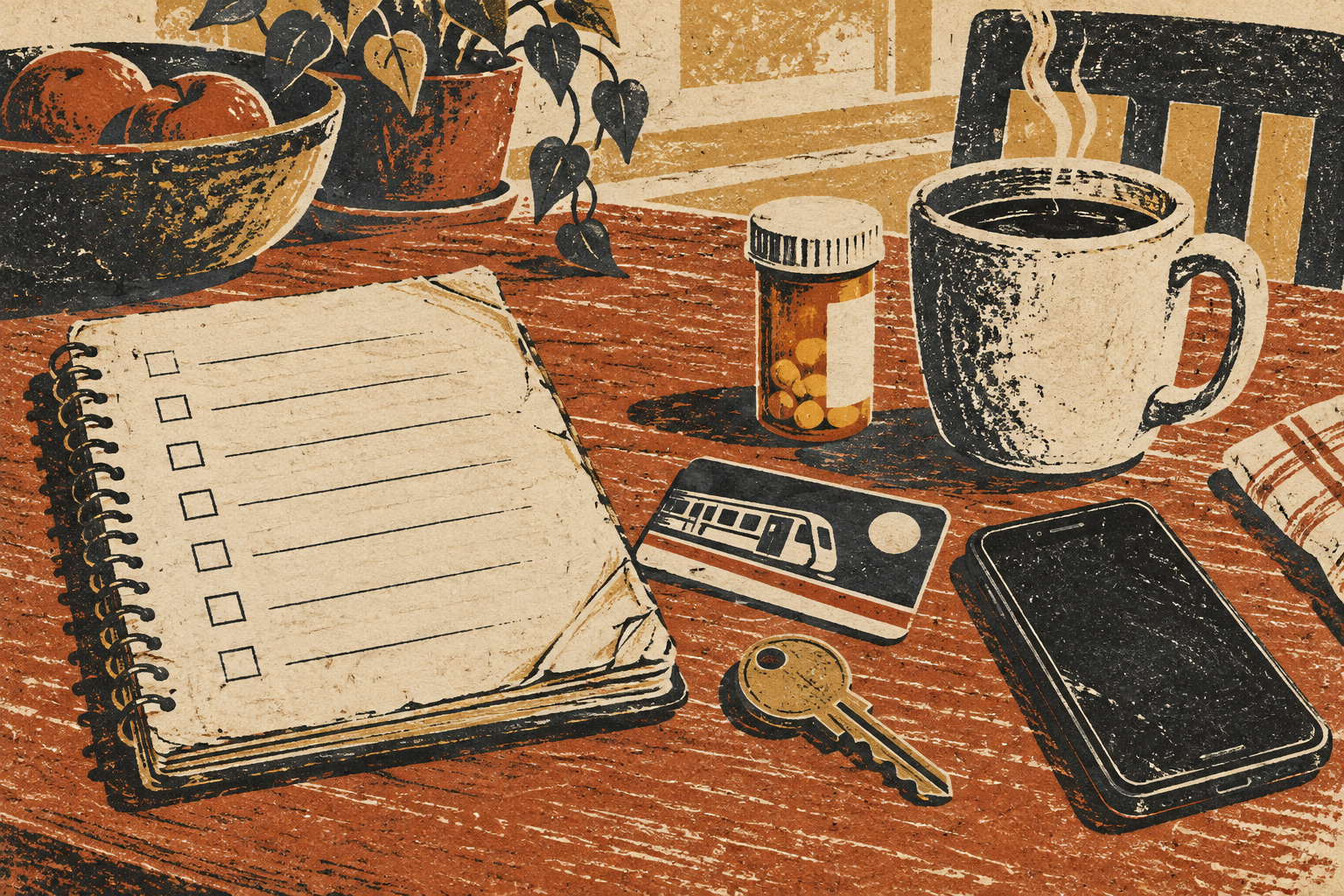
The first day outside may contain relief and pressure at the same time. A phone battery, the last bus, a shelter intake deadline, and the timing of an appointment can matter more than a big long-term goal. Make the next day workable before trying to solve the next year.
Before leaving: make a handover
Ask your release worker which documents, prescriptions, contact numbers, and instructions you will receive. Write down anything still missing and the person who will help obtain it. Keep release instructions in a folder you can reach, rather than in a bag someone else is carrying.
- Confirm the destination, the route, and what happens if transport is delayed.
- Write the reporting date, location, and contact number exactly as given. Ask your supervising contact about any uncertainty.
- Ask the care team how to continue prescribed care and whom to contact if there is a gap. A web guide cannot choose or change treatment.
- Decide how you will contact one trusted person without depending on a smartphone.
Day one: arrive and confirm
Check that your planned place to sleep is actually available. In the United States, 211 and HUD’s Find Shelter tool can help locate community services. A directory listing is a lead, not a reserved bed. Before traveling, ask about intake hours, referral rules, accessibility, identification, and whether there is space.
Tell your trusted contact where you arrived and when you will check in again. Charge your phone if you have one. Put essential numbers on paper so a lost device does not become a lost plan.
Day two: protect the next appointment
Read your instructions again when you are rested. For each appointment, write the travel time, cost, and a backup route. If you see a conflict, contact the responsible office promptly and ask what to do; do not assume that another appointment automatically changes a requirement.
For health connections, use the HRSA health center locator and ask the clinic about new-patient intake, costs, and bringing records. If you will run out of prescribed medication before an appointment, contact the prescribing team or a pharmacist for guidance instead of waiting silently.
Day three: open one practical door
Choose one task that helps several others: replacing an ID, making a job-center appointment, or identifying a reliable mailing address. Avoid paying for a course or an application until you understand the actual requirements and cost. Ask a public library about internet access, printing, and local services if you need a place to work on forms.
Try this priority rule: do first what has a fixed deadline or affects immediate safety; do next what unlocks other tasks; schedule the rest. A day containing one completed task and one confirmed appointment is a working plan.
Make a backup before you need it
Write “If this falls through, I will call ___ before ___.” Complete it for housing, transport, and communication. Share only what a supporter needs to help. You can ask someone to hold a spare number without giving them all your records.
Use the planner to record tasks without entering case numbers, identity numbers, or medical details. Printing a small page you can carry is often more practical than building a complicated system on your first day home.
Sources and next steps
- 211 community-service referrals ↗
- HUD Find Shelter ↗
- HRSA health center locator ↗
- USAGov: replacing identity documents ↗
Public information consulted October 25, 2026. Questions and worksheets are original PrisonFree editorial material. Confirm current requirements directly with the relevant agency.